

Ridhwan Tahir
Assistant Lecturer
Understanding the Russian Literature Masters I
“Pain and suffering are always inevitable for a large intelligence and a deep heart. The great
men must, I think, have great sadness on earth.”
- Fyodor Dostoevsky
In the pantheon of Russian literature, few names shine as brightly as that of Fyodor Dostoevsky. His exploration of the human psyche, profound philosophical inquiries, and vivid portrayal of 19th-century Russian society have cemented his status as one of the most significant and influential authors not only in Russia but across the globe. Through his novels, Dostoevsky delves into the complexities of the human condition, examining themes of morality, free will, the existence of God, and the nature of evil. This article aims to shed light on Dostoevsky’s life, his literary contributions, the indelible mark he has left on the world of literature, and some of his most famous quotes. This article is the first episode of a Russian trilogy, followed by discussions on Tolstoy and Chekhov.
Early Years and Hard Times
Dostoevsky was born on November 11, 1821, in Moscow, Russia, into a family of modest means. His father was a doctor at Moscow’s Hospital for the Poor, which exposed Dostoevsky to the harsh realities of life from an early age—an exposure that would later permeate his literary works. His mother’s death in 1837 and his subsequent enrollment in the Military Engineering-Technical University in St. Petersburg marked the beginning of a tumultuous period, fraught with financial instability and health problems.
A Brush with Death and Awakening
Dostoevsky’s life took a dramatic turn in 1849 when he was arrested for his involvement with the Petrashevsky Circle, a group of intellectuals who discussed banned literature critical of Tsarist Russia. During this time, he was sentenced to death by the Tsar. On the day of his execution, Dostoevsky experienced an acute awareness of life, savoring every moment with heightened senses. As he ate his last meals, each bite became more precious, and each breath of air felt like a treasured gift. He studied the faces around him with intense scrutiny, determined to etch every experience into his memory. As he marched into the courtyard to face the firing squad, he felt the sun’s warmth as never before; everything around him seemed to possess a magical quality, and he became fully alive.
Blindfolded and standing before the firing squad, Dostoevsky and his fellow prisoners heard the gunshots but felt nothing. Slowly, it dawned on them that the guns were loaded with blanks. The Tsar had chosen to play a cruel mind game rather than execute them.
What was meant as a psychological torment became a transformative experience for Dostoevsky. Instead of being broken, he emerged grateful to those he had once despised and appreciative of life itself. He believed this experience shaped him as a novelist, heightening his sensitivity and enabling him to perceive dimensions of reality he had never known before.
Literary Legacy
Dostoevsky’s return to Saint Petersburg in 1859 marked the beginning of his most productive period. His works during this time include some of the most acclaimed novels in world literature:
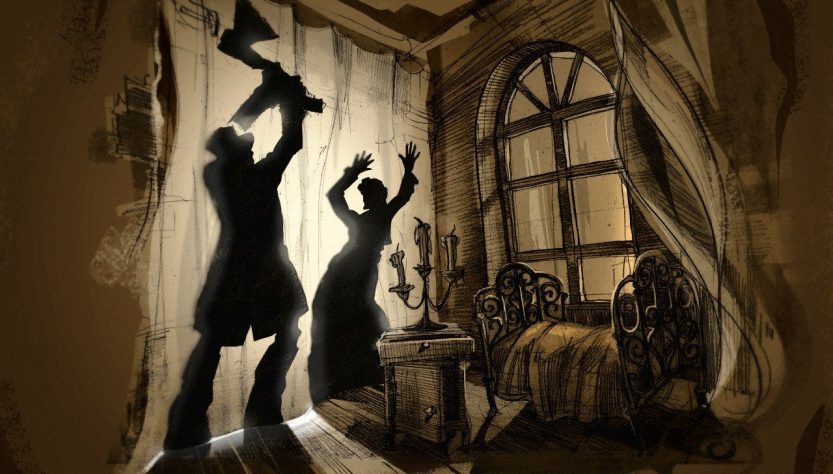
- Crime and Punishment (1866): A psychological study of crime, guilt, and redemption through the character of Raskolnikov, who commits murder under the guise of a philosophical idea, only to grapple with the moral consequences of his actions.
- The Idiot (1869): This novel presents Prince Myshkin, a character of pure innocence and transparency, as a Christ-like figure navigating a society rife with greed, envy, and social climbing. It highlights the struggle between good and evil within the human soul. This is a must-read for those grappling with the negativity of today’s world.
- The Brothers Karamazov (1880): Dostoevsky’s magnum opus explores faith, doubt, free will, and familial bonds through the lives of the Karamazov family. It is celebrated for its depth of characterization and philosophical scope, particularly in the chapters “The Grand Inquisitor” and “Rebellion.”
Beyond the Borders of Russia
Dostoevsky’s works transcend their 19th-century Russian setting, addressing universal human dilemmas and the search for meaning in a troubled world. His ability to dissect the darkest corners of the human mind, coupled with his unwavering faith in the possibility of redemption, offers readers a complex, often challenging, but ultimately enriching exploration of what it means to be human.
Fyodor Dostoevsky passed away on February 9, 1881, but his legacy endures. His novels continue to be read, studied, and revered for their profound insight into the human experience, earning Dostoevsky a place among the greatest authors in world literature. His exploration of faith, free will, and the nature of good and evil confronts readers with life’s essential questions, encouraging a deep, personal engagement with the text that remains unmatched. Dostoevsky’s work not only enriches Russian literature but also offers a timeless meditation on the complexities of the human soul.
Quotes of Dostoevsky
- “To go wrong in one’s own way is better than to go right in someone else’s.”
- “Taking a new step, uttering a new word, is what people fear most.”
- “The man who has a conscience suffers whilst acknowledging his sin. That is his punishment.”
- “Don’t be overwise; fling yourself straight into life, without deliberation; don’t be afraid – the flood will bear you to the bank and set you safe on your feet again.”
- “Reason is the slave of passion.”
- “If there’s no God, all is permitted.”
- “Those innocent eyes slit my soul up like a razor.”
Sources
- Brothers Karamazov Quotes (16 Quotes), goodreads.com/quotes/tag/brothers-karamazov. Accessed 30 March 2024.
- “Crime and Punishment Quotes by Fyodor Dostoevsky.” Goodreads, goodreads.com/work/quotes/3393917. Accessed 30 March 2024.
- Hall, Rev Cathy. “Fyodor Dostoevsky’s Life-Changing Experience,” 20 Sept. 2001, essaysfromexodus.scripting.com/stories/storyReader$1360#revCathyHall.